
Elevating Student Thinking: Instructional Strategies for Mathematics
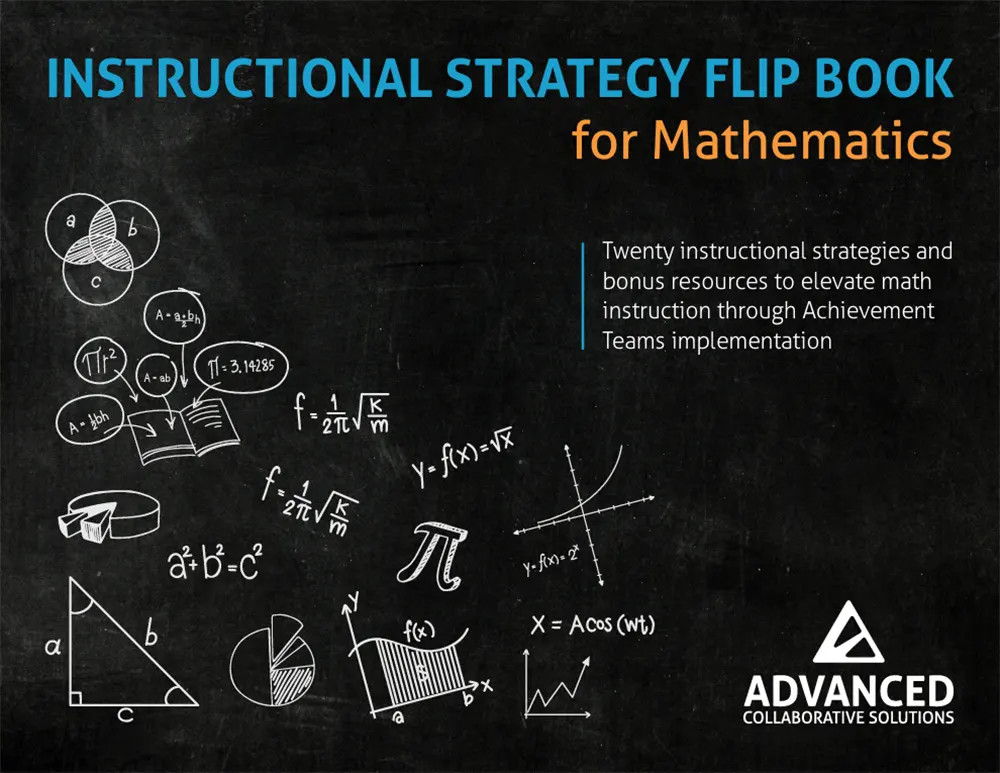
Our newly released Instructional Strategy Flip Book for Mathematics is designed to provide practical teaching strategies for math instruction. Ashley Taplin and I created it with one clear purpose: to support teachers in helping students think more deeply, work more independently, and engage more authentically with mathematics.
This flip book integrates principles from John Hattie’s Visible Learning and Jim Knight’s High-Impact Instruction, aligning with the Achievement Teams framework to support data-informed instructional decisions. By connecting research to daily practice, this resource empowers teachers to make intentional, student-centered choices that elevate learning.
In today’s math classrooms, the challenge is no longer “How do I teach this?” but “How do I help students think more deeply about what they’re learning?” Rather than delivering content for students to simply absorb, this flip book encourages instructional moves that allow students to process, reflect on, and engage with mathematical ideas.
Why This Resource, and Why Now?
As teachers continue to address unfinished learning and instructional gaps, the need for deeper engagement has never been more critical. The strategies in this flip book are grounded in research and designed to support instructional decisions that help students transition from a surface-level to deeper, transferable, and more meaningful understanding.
We have linked each strategy to one of the three phases of learning—Surface, Deep, or Transfer—making it easier for teachers to plan with purpose and meet students where they are in their learning. This structure enables educators to guide students from foundational understanding to application, utilizing strategies that effectively build, connect, and transfer knowledge. The flip book includes clear indicators for each phase, allowing teachers to make informed, intentional choices based on student data, instructional goals, and classroom discussions.
Rather than adding more to a teacher’s plate, this tool supports what excellent instruction already aims to do: promote reflection, metacognition, and student independence. With structure and clarity, it helps teams balance across learning phases, reduce over-scaffolding, and shift the cognitive work to students—ensuring that math instruction is both rigorous and responsive.
Moving the Cognitive Load: From Teacher to Student
Too often, math instruction unintentionally centers on teacher explanation while students watch, copy, and repeat. This flip book disrupts that pattern with strategies like:
- Which One Doesn’t Belong: students justify, explain, and critique.
- Error Analysis: students examine misconceptions to build conceptual clarity.
- Metacognition Through 3 Questions: students reflect on their own problem-solving decisions before asking the teacher for help.
These practices don’t just check for understanding—they develop it. They give students more choice in how they approach a problem, more confidence in making their thinking visible, and more independence in navigating challenges.
The result? Less compliance, more curiosity. Less guessing, more reasoning.
Designed for Engagement, Built for Behavior Support
Engaged students are focused students, and this flip book helps teachers foster that engagement every day. The strategies encourage student voice, active participation, and collaborative thinking, naturally reducing off-task behavior and creating a more productive classroom environment.
What sets these strategies apart is their ability to support both social-emotional and cognitive engagement:
- Students gain confidence by solving problems together and explaining their thinking.
- They learn how to give and receive feedback with purpose.
- They build metacognitive skills that foster perseverance and reduce math anxiety.
- They develop essential interpersonal skills and peer relationships, improving social-emotional competencies and fostering classroom belonging.
For example, Try It–Talk It–Color It–Check It creates low-stakes collaboration and peer support, while Post Then Prove, Square Then Compare gives students a chance to justify their thinking, compare strategies, and revise misconceptions through discussion with peers. These routines don’t just build skills—they cultivate a classroom culture of shared thinking and collective responsibility.
A Planning Tool for Instructional Teams
While designed for individual use, the flip book aligns seamlessly with Achievement Teams. Each strategy offers a clear connection to collaborative planning cycles:
- Pre-assessment results help teams choose a surface-level strategy to build fluency.
- Common misconceptions guide the selection of a deep learning strategy.
- Post-assessment analysis informs which transfer strategies support lasting learning.
This approach promotes collective teacher efficacy—when teams share responsibility for raising student thinking, they grow together in their practice.
How To Use the Flip Book
Whether you’re planning a lesson for tomorrow or guiding a team toward stronger Tier 1 math instruction, the Instructional Strategy Flip Book for Mathematics is your go-to planning companion (print copies available for purchase).
For Classroom Teachers: Elevate Instruction One Strategy at a Time
- Start with Your Goal: Use your learning target or objective as a starting point. What do you want students to understand, apply, or transfer by the end of the lesson? Use the strategy labels—Surface, Deep, and Transfer—to select a method that supports your intent.
- Use Student Data to Guide Strategy Selection: Pre-assessment results? Common errors on yesterday’s exit ticket? Choose a strategy that matches your students’ current level of understanding. If students are still acquiring skills, lean into Surface strategies. If they’re ready to extend or transfer learning, move into Deep or Transfer territory.
- Plan with the Play Card: Reference the Instructional Strategy Play Card on page 4 to quickly scan strategies by instructional purpose—whether you’re trying to connect new learning, build independence, or foster collaboration.
- Build in Metacognition: Many strategies (like Metacognition Through 3 Questions or Success Criteria) help students reflect on their thinking. Don’t skip these—they develop independence and shift the cognitive load from teacher to student.
- Try, Reflect, Repeat: Choose one strategy to try for a week. Reflect on how students responded. Did it help make thinking more visible? Were students more engaged or independent? Use these insights to build your strategy toolkit over time.
For Instructional Leaders: Coach with Intention and Clarity
- Use the Flip Book During Planning Meetings: Align your PLC or grade-level team meetings with the Achievement Teams cycle. Use student work or assessment data to:
-
- Identify a learning gap
- Select a high-impact strategy aligned to that phase of learning
- Plan how to implement and assess its impact
-
- Model and Observe Strategies in Action: Choose one focus strategy for a coaching cycle. Model it during a classroom visit, co-plan it with a teacher, or observe its implementation using a simple observation tool built from the flip book’s success criteria.
- Lead Reflection Using the Phases of Learning: After a lesson, guide teachers in reflecting:
- Was this strategy aligned to student needs?
- How did it support Surface, Deep, or Transfer learning?
- What student evidence shows growth in thinking?
- Foster Strategy Spotlights: In team meetings, ask teachers to bring examples of how they used a strategy from the flip book. Encourage peer-to-peer sharing of adaptations, student responses, or what they might tweak next time.
- Connect Strategy Use to Schoolwide Goals: Whether your school is focusing on rigor, engagement, or reducing scaffolding, use the flip book to ground those goals in daily practice. Align professional learning, coaching, and walkthrough look-fors to strategy use that supports student thinking.
Final Thought: Math Learning That Sticks
The Instructional Strategy Flip Book for Mathematics isn’t just a resource to use—it’s an invitation to rethink how we engage students in math. It’s about shifting the balance of cognitive work from teacher to student, offering more choice, and making student thinking the focus of instruction.
Inviting students to engage in reasoning, reflection, and revision doesn’t just build better mathematicians—it builds confident, capable, critical thinkers. Explore the flip book today.