
MTSS in Action: A Practical Guide to Using Formative Assessment for Tiered Instruction
MTSS in Action: A Practical Guide to Using Formative Assessment for Tiered Instruction
A growing number of schools and districts are implementing the Multi-Tiered System of Supports (MTSS) framework to address student academic and behavioral needs. While MTSS in education is an excellent solution to closing persistent gaps in theory, implementation remains difficult for many educators and leaders.
As more districts embrace this model, the challenge shifts from deciding what to implement to figuring out how to do it effectively. In most cases, a clear understanding of the MTSS process is the first step before putting it into practice successfully at every level of support.
High-quality instruction is the foundation of MTSS, but without real-time insight into student learning, even the best instruction can miss the mark. That’s where formative assessment comes in. When used intentionally, formative assessment drives the kind of instructional decisions that help every student succeed—no matter their starting point.
In this post, we’ll explore how educators and instructional leaders can use formative assessment to strengthen Universal and Supplemental instruction within MTSS. Along the way, we’ll highlight key strategies from the Achievement Teams model that help translate data into action.
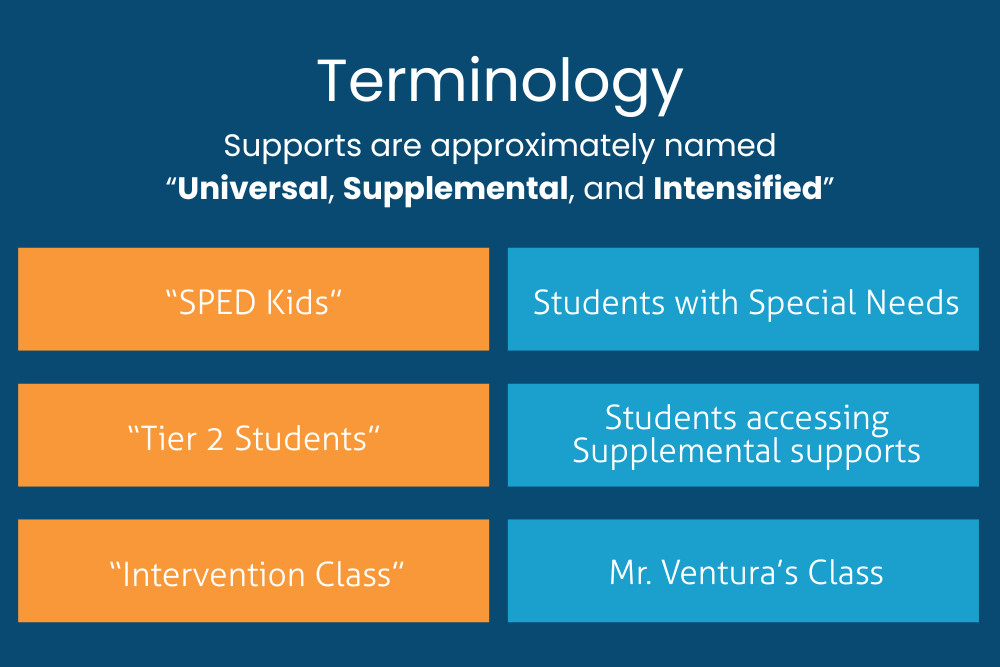
Please note that we have intentionally replaced “Tier” language with the terms “Universal” in place of “Tier 1,” “Supplemental” in place of “Tier 2,” and “Intensive” in place of “Tier 3.” This verbiage is pulled from the “Continuum of Support” from Universal Design for Learning. Differentiated instructions are integrated and implemented at all levels of the continuum to ensure academic, behavior, social-emotional, and mental health development of all students in the most inclusive and equitable learning environment.
Foundations of MTSS: What Educators Need to Know
At the heart of a successful Multi-Tiered System of Supports (MTSS) lies Universal instruction—also referred to as “best, first instruction.” This foundational layer is designed to meet the needs of all students through high-quality, evidence-based teaching practices.
A meta-analysis conducted by the Meadows Center for Preventing Educational Risk found that effective Universal instruction significantly improves academic outcomes for students. Specifically, struggling readers who received enhanced Universal instruction maintained or improved their reading comprehension compared to peers receiving typical instruction.
These improvements demonstrate why MTSS in education is gaining widespread adoption as a proactive instructional model.
Key Components of Effective Universal Instruction:
- Systematic and Explicit Teaching: Implement structured lessons that clearly define learning objectives and provide guided practice.
- Differentiation: Tailor instruction to address the diverse learning needs, interests, and abilities of students.
- Data-Informed Decision Making: Utilize formative assessments to monitor student progress and inform instructional adjustments.
- Collaborative Planning: Engage in collaborative team meetings to analyze student data and share effective instructional strategies.
When instructional leaders create a culture that values these elements, it makes a big difference. Offering professional development on evidence-based teaching strategies and organizing collaborative data discussions can help teachers strengthen their Universal instruction.
By strengthening Universal instruction, schools can tackle learning gaps early on. This not only cuts down on the need for intensive interventions later but also helps grant all students a fair chance to succeed.
Bridging the Gap Between Data and Daily Practice with Achievement Teams
What does MTSS stand for in education? Well, to understand that, , it’s helpful to examine how formative assessment functions within a tiered system.
Achievement Teams is a four-step protocol that operationalizes the core tenets of MTSS—formative assessment, early intervention, and data-driven instruction—within the flow of everyday teaching.
At its core, the framework provides a structured way for teachers to collaboratively analyze short-cycle assessment data, reflect on student learning, and refine Universal and Supplemental instruction.
The Four-Step Protocol:
- Chart the Data: Examine results from recent short-cycle formative assessments.
- Set Goals: Identify specific, measurable objectives based on student needs.
- Craft Baseline Evidence Statements: Describe what students are doing and saying to demonstrate learning.
- Select High-Impact Instructional Strategies: Choose instructional approaches tailored to the data. Check out the Achievement Teams Instructional Strategy Flip Book with dozens of proven teacher moves to weave into instruction.
Why the Achievement Teams Protocol Works
The Achievement Teams process is built to work hand in hand with MTSS. It puts formative assessment at the center, encourages teachers to collaborate around real-time data, and supports early intervention before students lose ground. That’s why Achievement Teams are such a strong fit for both Universal (Tier 1) instruction and Supplemental (Tier 2) support.
The Role of Short-Cycle Formative Assessment in MTSS Success
Short-cycle formative assessments—administered every 2-4 weeks, ungraded, and focused on priority standards—are essential to effective MTSS. Unlike benchmarks or interim assessments, these quick pulses on learning allow educators to respond to student needs in real-time.
Why Formative Assessments Matter:
- Support Universal instruction by identifying which students are mastering core content and which need additional support.
- Inform Supplemental interventions by helping teachers group students based on current, actionable data.
- Encourage reflection by making student progress visible and promoting ownership of learning.
It’s important to remember that formative assessments aren’t just about measuring learning—they’re meant to improve it. Within an MTSS framework, they drive ongoing growth and better instruction.
Beyond better learning, formative assessment cycles within MTSS offer valuable benefits for students, teachers, and leaders alike. These quick checks are a key part of what the MTSS process is, helping educators stay ahead of problems instead of reacting to them later.
Benefits to Students
- Targeted feedback helps students understand what they’ve mastered and where to grow.
- More relevant instruction meets learners where they are, increasing engagement and reducing frustration.
- Greater agency as students see and reflect on their progress in real-time.
Benefits to Educators
- Real-time insights allow classroom teachers to intervene quickly before gaps persist and widen. This ensures that multi-tiered support systems are working as intended at every level.
- Sharper instructional planning, informed by formative assessments, ensures teachers spend valuable instructional minutes on the content that matters most to the unique students in front of them.
- Enhanced student ownership of learning grows as students see and experience measurable growth between more frequent checkpoints.
Benefits to Instructional Leaders and Administrators
- Sharper instructional planning rooted in frequent, meaningful data—not just benchmark.
- Stronger Universal systems by identifying patterns in core instruction that may need adjustment, unclogging MTSS processes and freeing up precious Intensive resources for students that truly need them.
- Informed coaching and PD based on observed instructional trends and team reflections.
From Theory to Action: How to Integrate Formative Assessment into MTSS Using Achievement Teams
For School and District Leaders
The key to MTSS success is not just having the right tools—it’s aligning them to your instructional ecosystem. Here’s how leaders can embed the Achievement Teams framework to strengthen all tiers of instruction:
- Map MTSS tiers to the Achievement Teams process to ensure alignment across universal and targeted supports.
- Build in time for teacher teams to meet regularly and review short-cycle data.
- Offer PD focused on formative assessment design and the four-step protocol.
- Foster vertical and horizontal collaboration to build coherence across grade levels and subject areas.
- Track progress systemically and celebrate gains at the student, team, and school levels.
For Classroom Educators
Teachers don’t need to overhaul everything—small, strategic shifts can lead to big instructional improvements:
- Select 1–2 priority learning targets aligned to essential standards.
- Design short-cycle assessments that directly measure those targets.
- Use team meetings to review results and adjust instruction collaboratively.
- Involve students in setting goals and tracking their own learning.
- Reflect regularly on data trends and refine strategies as needed.
A Proactive, Collaborative Approach to MTSS
Formative assessment isn’t just another teaching strategy—it drives real, ongoing improvement in how students learn. When combined with a clear process like Achievement Teams, it turns good intentions into concrete gains, giving teachers a practical way to track progress and adjust instruction in real time.
MTSS works best when it’s practical, data-informed, and built on collaborative routines that teachers can sustain. Achievement Teams offer a ready-made structure to help schools move from theory to action—and from compliance to meaningful outcomes.
Whether you’re a teacher looking for clarity or a district leader seeking coherence, this work is possible—and it’s worth it.
Turn Insight Into Action With Achievement Teams
Get in touch with us and let’s work together to improve academic achievement for the students you serve.